IT'S TIME TO ROOT FOR THE MONKEY
Contributions Of Our Primate Friends

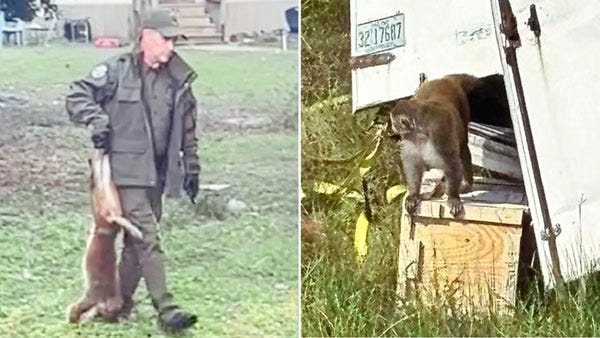
On October 28, 21 Rhesus monkeys from the Tulane National Biomedical Research Center in New Orleans were being transported in a truck that overturned in Jasper County, Mississippi. This crash resulted in some deaths, but three escaped. NBC News called the episode “the latest glimpse into the secretive industry of animal research”. It’s not my intent to simply relate a news story, (after all, it does sound like a Planet Of The Apes sequel) but to provide some clarity as to the sacrifice of all primates in regard to the wellbeing of humankind to the detriment of their own lives.
The aforementioned monkeys were unwitting/unwilling research subjects...for our benefit as they always have been. Unfortunately, in the Mississippi incident social media gave rise to untruthful allegations about them. If only they had a legal advocate. The Jasper County Sheriff’s Department erroneously reported that the monkeys carried hepatitis C, herpes, and Covid 19. It was later verified that they were disease free. The three that were not initially captured roamed into the nearby countryside. At this point, things became tragic for the trio. Two were shot by local residents and the last remaining monkey was tranquilized by the authorities. I’ve never been a huge animal rights advocate but this incident left me pondering. It’s time to root for the monkey.
Monkeys are not props, tools, or exhibits. They are sentient beings with emotions, relationships, and a right to dignity. They have entertained us via film and television, but their charm masks a deeper loneliness – a life scripted for human amusement. Entertainment monkeys live lives far removed from the wild joy they portray on the screen. The early space pioneers were monkeys – Albert, Able, Baker, and Gordo. They provided invaluable data that paved the way for human astronauts. Yet their historic contributions are barely acknowledged today.
Zoos present a paradox. On one hand, they offer protection to endangered species and educate the public. On the other, they confine monkeys to artificial habitats, often far smaller and less stimulating than their natural environments. While some zoos strive to provide enrichment and social structures, others fall short, leaving monkeys isolated and bored. The sight of a monkey behind glass—gazing out with curious or forlorn eyes—should prompt us to ask: Are we preserving them, or imprisoning them?
Whether it’s phasing out entertainment acts, investing in humane research alternatives, or reimagining zoos as sanctuaries, we owe it to these creatures to treat them with respect. It’s time to root for the monkey.